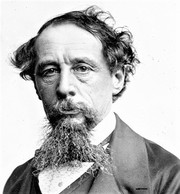
Charles Dickens (1812-1870) was an English novelist and the towering figure of Victorian literature, whose characters, phrases and Christmases have soaked so deep into the culture that his surname became an adjective.
Born in Portsmouth, the second of eight children, his childhood was upended when his father was imprisoned for debt and twelve-year-old Charles was sent to label bottles in a blacking factory, an experience of shame and abandonment that fed his fiction for the rest of his life.
From court reporter he rose to national sensation with The Pickwick Papers before he was twenty-five, and thereafter produced a run of novels unmatched in the language: Oliver Twist, Nicholas Nickleby, David Copperfield, his own favourite and the most autobiographical, Bleak House, Hard Times, A Tale of Two Cities and Great Expectations, most published in the monthly serial parts that had all of literate Britain waiting on cliffhangers.
A Christmas Carol, written in six feverish weeks in 1843, effectively reinvented the modern Christmas.
A tireless campaigner against the workhouse, the slum and the debtor's prison, he was also an editor, actor and mesmerising public reader whose farewell tours hastened his death at fifty-eight, leaving The Mystery of Edwin Drood unfinished.
He is buried in Poets' Corner, Westminster Abbey, against his stated wishes.