A curated selection of book series and their reading orders. Open any to see the order to read them in, where each book fits, and what to read next.
Wider worlds that span several series - with reading orders across the whole thing.
10 books · Joe Abercrombie
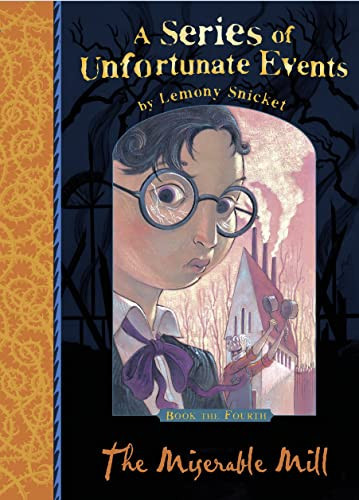
Lemony Snicket
Thirteen books, published between 1999 and 2006, recounting the misfortunes of Violet, Klaus and Sunny Baudelaire, orphaned when their parents die in a fire and passed from one unsuitable guardian to the next while the villainous Count Olaf schemes to steal their fortune. Narrated by Lemony Snicket - the pen name of Daniel Handler - who warns the reader at every turn to put the book down, the series grows from gothic comedy into a sprawling mystery about a secret organisation known as V.F.D., and deliberately leaves many of its questions unanswered.
13 books
George R. R. Martin
A Song of Ice and Fire is George R.R. Martin's epic fantasy series following the struggle for control of the Iron Throne of Westeros. The story is told through rotating point-of-view characters whose perspectives often conflict, creating a narrative where no single character holds the full truth. The series is known for its moral complexity, willingness to kill major characters, intricate political plotting, and a sprawling cast that grows with each volume. Five of a planned seven novels have been published, with the sixth - The Winds of Winter - long awaited by readers.
5 books
Hergé
Hergé's Belgian comic albums follow Tintin, a young reporter who never quite seems to file a story, and his dog Snowy, through adventures running from Shanghai to the Andes and twice to the Moon. The supporting cast became one of the most recognisable in comics: the irascible Captain Haddock, the hard-of-hearing Professor Calculus, and the near-identical detectives Thomson and Thompson. Hergé drew in the ligne claire style he made famous, where every line carries the same weight and nothing is shaded, and from The Blue Lotus onwards he researched each setting closely enough that the books double as period travelogues. Twenty-three albums were completed between 1929 and 1976, with a twenty-fourth left unfinished at his death.
23 books
Joe Abercrombie
A sequel trilogy set a generation after the events of The First Law and the standalones, in a world undergoing industrialisation. The mills are changing who has money, the dispossessed are organising, and the Union's political structures are straining under pressures they were not built to handle. New characters carry the story - Savine dan Glokta, an investor and social climber who has inherited her father's intelligence and ruthlessness; Leo dan Brock, a celebrated war hero with political ambitions; Rikke, a young woman from the North with the Long Eye, the ability to see the future at considerable personal cost. Characters from the original trilogy and standalones return in diminished or transformed roles. The Age of Madness is Abercrombie at his most politically engaged - a trilogy about revolution, its causes, its violence, and the dispiriting reliability of its outcomes.
3 books · The First Law World
Neal Shusterman
Neal Shusterman's trilogy is set in a future where disease, ageing and death have been conquered and an artificial intelligence called the Thunderhead runs the world. To keep the population in check, scythes are licensed to end lives. Citra and Rowan are taken on as apprentices to a scythe and must learn a job neither of them wanted. The story ends with The Toll; Gleanings is a later collection of stories set in the same world, best read after the trilogy.
4 books
Patrick O'Brian
Patrick O'Brian's twenty completed novels follow Jack Aubrey, an officer of the Royal Navy, and Stephen Maturin, the ship's surgeon who is also a naturalist and an intelligence agent, through the long wars against Napoleonic France. The books are as much about the friendship between the two men as about the fighting, and O'Brian writes the period from the inside: the seamanship, the medicine and the language of the day are left largely unexplained, on the assumption that the reader will keep up. Beginning with Master and Commander in 1969 and ending with Blue at the Mizzen in 1999, the sequence is often described as one very long novel rather than twenty separate ones, and rewards being read in order.
20 books
Dan Abnett
In the city of Queen Mab, Alizebeth Bequin, a young woman raised by the secretive Cognitae, finds herself drawn into the long and bitter conflict between the Inquisitors Gregor Eisenhorn and Gideon Ravenor, and into the schemes of the enemies moving against them both. Two of a planned three books have been published, Pariah (2012) and Penitent (2021); the third, Pandaemonium, is still to come.
2 books · The Inquisition
Stephen King
Stephen King's detective novels begin with retired policeman Bill Hodges hunting the Mercedes Killer in Mr. Mercedes, helped by Holly Gibney. After the Bill Hodges trilogy, Holly takes the lead: she joins the investigation in The Outsider, stars in the title novella of If It Bleeds, and has novels of her own in Holly and Never Flinch.
7 books
Richelle Mead
A spin-off from Vampire Academy, Bloodlines follows Sydney Sage, an Alchemist sworn to keep vampires hidden from the human world, who is sent undercover to protect a Moroi princess and finds her loyalties tested. Best read after Vampire Academy, whose characters return throughout.
6 books
Philip Pullman
A companion trilogy set in the same multiverse, functioning as both prequel and sequel to His Dark Materials. La Belle Sauvage, the first volume, is set a decade before Northern Lights and follows a young boy protecting the infant Lyra during a catastrophic flood, establishing the theological and political forces that shape her world before she is old enough to understand them. The Secret Commonwealth, the second volume, follows an adult Lyra in her twenties and is the darkest and most complex work in the wider universe. The Rose Field, published in October 2025, brings the trilogy to its conclusion - Lyra's journey through Central Asia to find her estranged dæmon Pantalaimon, and with him, the capacity for wonder she fears she has lost.
3 books · His Dark Materials
Cormac McCarthy
Three novels set on the Texas-Mexico border in the mid-twentieth century, following two young cowboys - John Grady Cole and Billy Parham - coming of age in a landscape on the edge of irreversible change. The trilogy moves from the ranching country of west Texas deep into Mexico and back, charting loss, violence, and the death of the American frontier. Collectively regarded as one of the great American literary epics of the twentieth century.
3 books
C.S. Lewis
C.S. Lewis's seven books for children tell of Narnia, a land of talking animals and magic watched over by the great lion Aslan, reached from our world through a wardrobe, a painting and stranger doors. They were published from 1950 to 1956, beginning with The Lion, the Witch and the Wardrobe. Since the 1990s, editions have numbered them in story order, starting with The Magician's Nephew, which tells how Narnia began. Readers still disagree about which order is better, so both are shown here.
7 books
Terry Pratchett
The City Watch series is one of the major story lines that make up 8 of the Discworld books. It focuses on the Ankh-Morpork City Watch, formerly the Ankh-Morpork Night Watch, in particular the captain, and later commander of the Watch, Samuel Vimes, usually when he is being manipulated by Lord Vetinari. The books tend to be whodunit in nature and often feature conspiracies aimed at toppling regimes.
8 books · Discworld
Mercedes Lackey
Mags, a boy worked as a slave in a mine, is chosen by a Companion and brought to Haven just as the Heralds' Collegium is opening as a school. The books follow his training, and the dangers that follow him from his past.
5 books · Valdemar
Iain M. Banks
The Culture series is a science fiction series written by Scottish author Iain M. Banks and released from 1987 until 2012. The stories centre on The Culture, a utopian, post-scarcity space society of humanoid aliens and advanced superintelligent artificial intelligences living in artificial habitats spread across the Milky Way galaxy. The main themes of the series are the dilemmas that an idealistic, more-advanced civilization faces in dealing with smaller, less-advanced civilizations that do not share its ideals, and whose behaviour it sometimes finds barbaric. In some of the stories, action takes place mainly in non-Culture environments, and the leading characters are often on the fringes of (or non-members of) the Culture, sometimes acting as agents of Culture (knowing and unknowing) in its plans to civilize the galaxy. Each novel is a self-contained story with new characters, although reference is occasionally made to the events of previous novels.
9 books
Mercedes Lackey and Larry Dixon
Written with Larry Dixon, it follows Darian, an orphaned boy from a frontier village, who is taken in by the Hawkbrothers after his home is attacked. Set shortly after the Mage Storms.
3 books · Valdemar
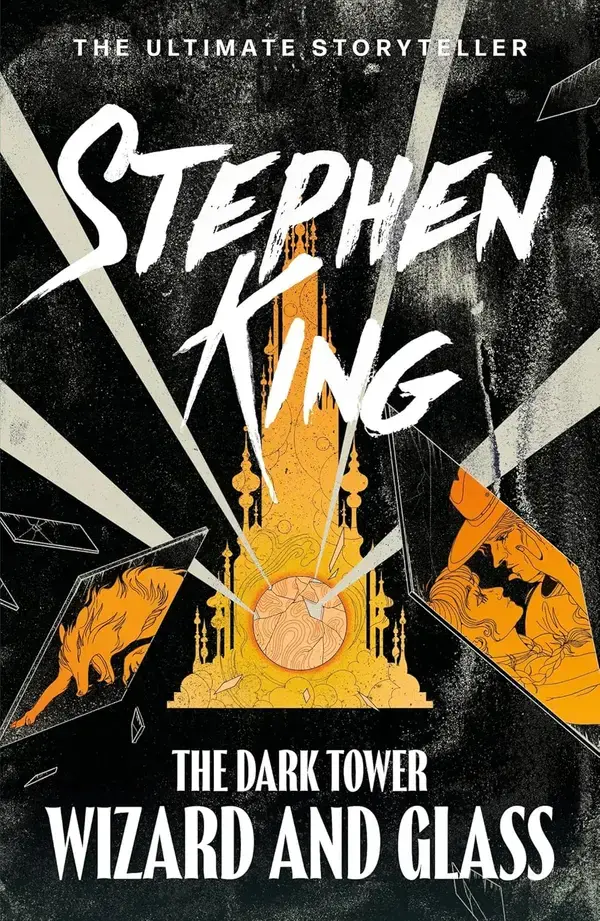
Stephen King
Eight novels written by Stephen King between 1982 and 2012, following Roland Deschain - the last gunslinger - on his quest across a dying world toward the Dark Tower, the nexus of all realities. The series defies easy categorisation: it is a western, a horror novel, a post-apocalyptic epic, and a high fantasy quest, held together by King's mythology of ka - fate - and a cast that grows from a lone figure in the desert to a fully realised fellowship. Begun when King was nineteen and completed over four decades, it is widely regarded as his magnum opus. Inspired by Robert Browning's poem "Childe Roland to the Dark Tower Came" and Sergio Leone's spaghetti westerns, it eventually grew to connect with much of King's wider fiction, though the eight core novels stand entirely on their own.
8 books
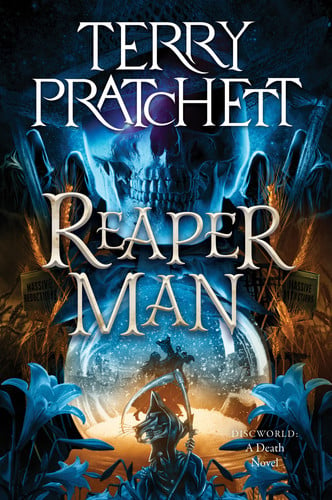
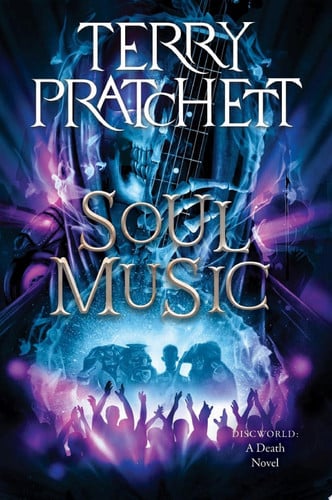
Terry Pratchett
Death is, as you'd expect, a tall hooded skeleton with a scythe who SPEAKS IN A VOICE LIKE THE SLAMMING OF COFFIN LIDS. However, he also likes a good curry, kittens, and finds the lives of mortals endlessly fascinating. Beginning with Mort, in which Death takes on an apprentice, the series explores what happens when an immortal anthropomorphic personification develops an unhealthy interest in humanity. His granddaughter Susan Sto Helit becomes the central character from Soul Music onwards, reluctantly stepping in whenever Death goes missing or takes on new responsibilities. The five books range from workplace comedy to meditations on belief, memory, and time - Hogfather tackles the power of myth, while Thief of Time deals with the nature of time itself.
5 books · Discworld
Anne McCaffrey, Todd McCaffrey and Gigi McCaffrey
Dragonriders of Pern is a science fantasy series that Anne McCaffrey began in 1967 and that her son Todd McCaffrey has continued since 2003, writing alone and with her. Pern is a planet whose human settlers have lost most of their technology and even the memory of where they came from. When the elliptical orbit of the Red Star brings it close, Thread - a spore that devours anything living - falls on Pern for some fifty years, and the Pernese fight it with fire-breathing dragons, each bound for life to a rider by Impression at its hatching. Theirs is a pre-industrial, broadly feudal society of dragonriders in their Weyrs, Holders, craftsmen and harpers, and the holdless. The books span more than two and a half thousand years of Pern's history, from the first landing in Dragonsdawn to the Ninth Pass of the original trilogy. Anne McCaffrey asked readers to take them in the order she wrote them, which is the order here, though she suggested reading the Harper Hall trilogy before The White Dragon. The two novellas that became Dragonflight made her the first woman to win a Hugo Award for fiction, and the first to win a Nebula.
26 books
Frank Herbert
Frank Herbert's original six Dune novels, published between 1965 and 1985, are among the most influential works in science fiction. Beginning with the story of Paul Atreides and the desert planet Arrakis, the series expands across thousands of years to explore the consequences of messianic leadership, the tension between prescience and free will, and humanity's long struggle to avoid evolutionary stagnation. Each novel shifts the scope and timeline dramatically - from the political intrigue of Dune to the multi-millennial reign of God Emperor of Dune to the galaxy-spanning upheaval of Heretics and Chapterhouse. Herbert completed six novels before his death in 1986; his son Brian Herbert and Kevin J. Anderson later continued the series with prequels and sequels.
6 books
Ursula K. Le Guin
Earthsea is an archipelago of islands scattered across an open sea, where magic is a matter of knowing the true names of things. Ursula K. Le Guin's first three books follow Ged, a gifted and proud boy from the island of Gont, from his schooling at the wizards' school on Roke and the shadow his pride lets loose on the world, to his years as Archmage. Eighteen years later Le Guin returned to Earthsea with Tehanu, which looks at the same world through the eyes of Tenar, now a widowed farmer, and asks what power has meant for women; Tales from Earthsea and The Other Wind completed the cycle in 2001. Le Guin intended Tales from Earthsea to be read before The Other Wind, as it is here.
6 books
Dan Abnett
Gregor Eisenhorn is an Inquisitor in the Warhammer 40,000 universe, hunting heretics, aliens and daemons across the Imperium of Man - and slowly, over a career of more than a century, coming to use the very powers he swore to destroy. Dan Abnett's trilogy Xenos, Malleus and Hereticus follows his descent; The Magos, published in 2018, adds a later novel alongside the Eisenhorn short stories. Eisenhorn's former pupil carries the story on in the Ravenor trilogy.
4 books · The Inquisition
Brandon Sanderson
Elantris was the city of the gods - home to beings of silver skin and impossible power, sustained by the magic of AonDor. Then, ten years ago, the Shaod stopped granting its transformative gift and began delivering a curse instead. Now the once-radiant city rots, and those taken by the Shaod are cast inside its walls to suffer an eternity of pain without the release of death. Set on the planet Sel in the Cosmere, the Elantris series explores a world where magic is tied to geography, faith is wielded as a weapon, and the line between divinity and damnation is thinner than anyone suspects.
2 books · The Cosmere
Patricia C. Wrede
Patricia C. Wrede's comic fantasy begins with Princess Cimorene, who is bored by embroidery and etiquette, runs away from home and volunteers to keep house for a dragon. The four books turn fairy-tale conventions inside out, in a forest where the rules of stories really do apply and wizards can be melted with soapy water and lemon juice. Talking to Dragons was written first but is set last, a generation later, so most readers now start with Dealing with Dragons and read in story order.
4 books