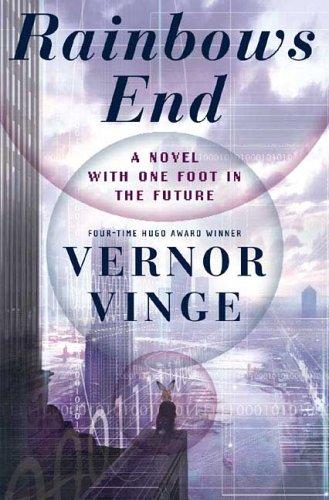
In the San Diego of the near future, Robert Gu, once a celebrated and cruel poet, wakes from Alzheimer's disease into a body and mind restored by medicine but a world he no longer understands, where wearable computers and contact-lens displays layer digital reality over every surface and his old gift for language has quietly vanished. Dependent now on his estranged son Bob, a Marine officer, and above all on his sharp thirteen-year-old granddaughter Miri, he goes back to school beside teenagers to relearn how to live, even as he is drawn into a shadowy affair: a traitorous intelligence officer and a manipulator hiding behind the avatar of a talking rabbit are testing a new technology of mass mind control. Vinge, a computer scientist and theorist of the technological singularity, writes less a thriller than an argument in fiction, and readers admired its prescient vision of augmented reality more than its somewhat diffuse plotting. Robert's fumbling toward his family and toward relevance runs alongside a quiet contest over who controls a hyper-connected society. It is really about ageing, obsolescence and the uneasy bargain between security and surveillance in a world that watches itself.